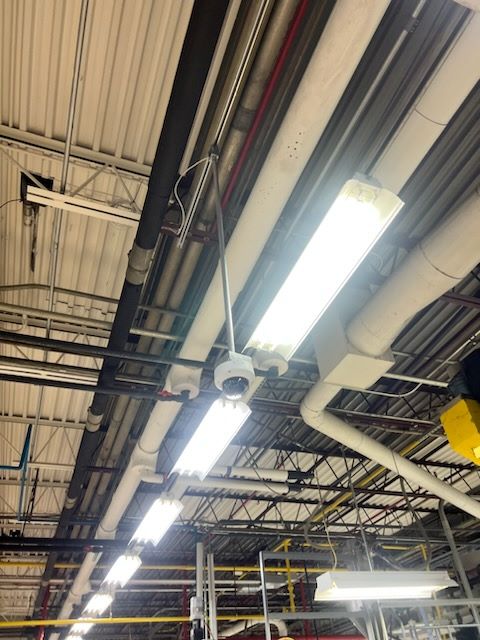
Warehouse coverage in the Lehigh Valley should follow goods and vehicle movements rather than a fixed camera-per-square-foot rule. Racks, stacked pallets, trailer positions and forklifts change the visible scene. Design separate tasks for general activity, loading transfers and the detail required to investigate a discrepancy.
Follow the loading workflow
Map the route from receiving through staging to storage and dispatch. Observe doors open and closed, occupied docks and parked trailers. An overview can establish sequence, while a closer view may be needed for handling details. Do not assume a general camera will read every shipping label or plate. Test the actual target size, position and movement before promising that result.
Plan for high ceilings and changing obstructions
A camera mounted high above a warehouse may show layout while missing faces or details beneath racks. Consider service access, vibration, illumination and safe mounting. Record power and network dependencies, especially for cameras far from the communications room. Include spare capacity and documented naming so new aisles can be added without losing the original design purpose.
Accept recorded performance
Stage representative movements during normal operating and night conditions. Retrieve the sequence using ordinary user permissions and export it for separate playback. Check retention, time alignment, blocked views and health alerts. Re-test affected scenes after rack changes, lighting replacement or a software update. Retain the result and unresolved limitations in the project record.
Related learning guides
Use the complete planning guide, hardware hub, manufacturer comparison and acceptance worksheets to document the selected configuration and its test evidence.
Related NERSA reference
See NERSA’s Lehigh Valley warehouse camera reference for the corresponding applied reference.